A group chat can agree on a date, a budget and a destination, then spend days stuck on one question: should everyone book hotel rooms, or stay together under one roof? Hotel versus self catering stays is not simply a choice between room types. It affects the cost per person, how easily the group can spend time together, and how much organising lands on one person’s shoulders.
For a hen weekend, stag trip, family gathering, wedding stay or work outing, the right answer depends on what the group wants from its time away. A hotel can be ideal when privacy and on-site service come first. Self-catering often makes more sense when the plan is built around shared time, flexible schedules and keeping the practical side of the trip simple.
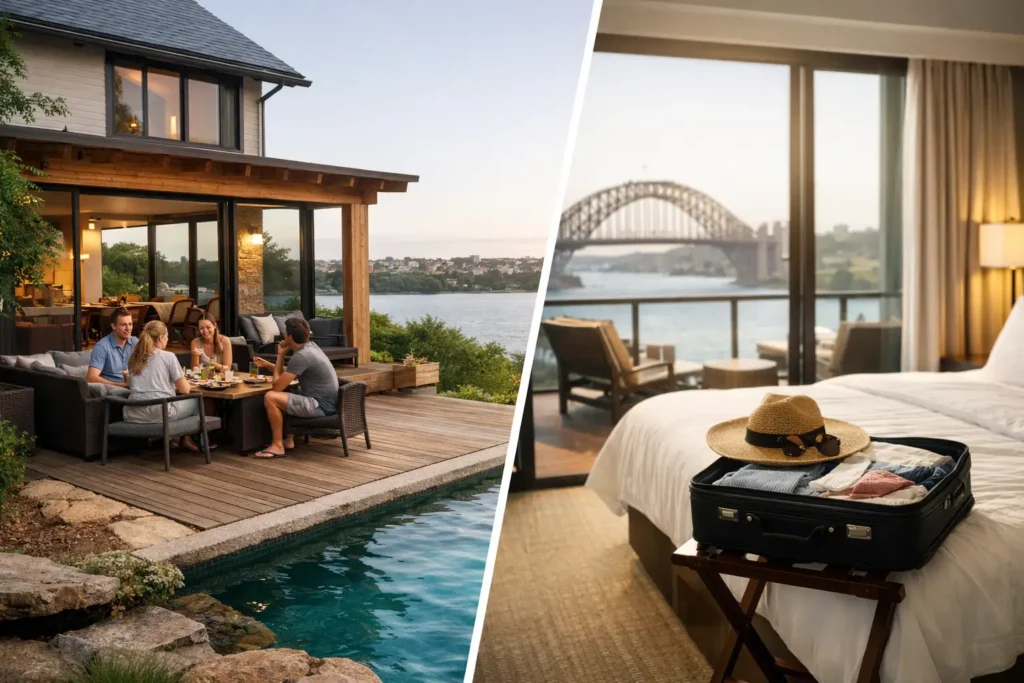
Hotel versus self catering stays for groups
Hotels are familiar for a reason. Guests have their own room, housekeeping is handled, and a reception team is usually available for everyday questions. If everyone is arriving at different times, staying just one night, or prefers a quiet retreat after an event, that independence can be a real advantage.
The challenge starts when a group wants to gather. You may be split across floors, limited to meeting in the bar or restaurant, and reliant on restaurant opening hours for breakfast or a late bite. The person organising the trip can also find themselves chasing individual room bookings, deposits and arrival details.
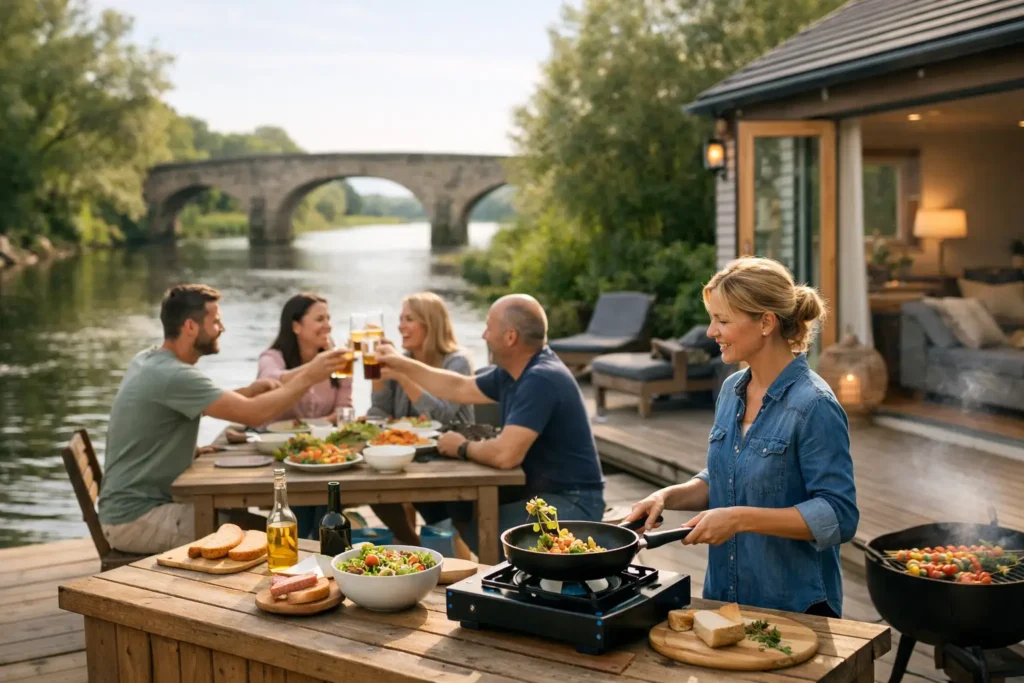
Self-catering accommodation changes the shape of the stay. A house or a collection of nearby flats gives the group a shared base, with living space to relax, chat, play music, get ready together or recover over a proper breakfast. You can make tea when you like, keep drinks chilled, order in if plans change and avoid having to decide every meal as a full group.
That shared space is especially valuable for celebrations. The moments people remember are often not the formal activity or evening reservation. They are the catch-up before heading out, the late-night conversation at the kitchen table and the easy morning after when nobody has to rush out of a dining room.
The real cost is more than the nightly rate
A hotel room rate can look straightforward, particularly for couples or solo travellers. But for a larger group, the total can rise quickly once you add multiple rooms, breakfast, parking, meals out and the extras that come with spending most of the day away from your room.
Self-catering gives you more control. A group can share the cost of a larger property, prepare some meals and buy drinks or snacks for the house rather than paying individual bar prices. This does not mean every self-catering break will be cheaper. A luxury property in a central location may cost more than basic hotel rooms, particularly at busy weekends. The key is to compare the whole trip, not just the headline price.
Ask what is included, how many people can sleep comfortably, whether there are enough bathrooms, and whether the property is close enough to walk to the places you plan to visit. A low rate can become poor value if the group needs several taxis, has no room to socialise, or ends up paying for every meal because there is nowhere to prepare food.
For organisers, a single accommodation booking can also be easier to manage than a long list of individual hotel reservations. Clear payment dates and a defined group capacity give everyone something practical to work from.
When hotel rooms can offer better value
Hotels can still be the sensible choice for a short, low-key visit. If guests are mainly attending a wedding, conference or family occasion and will spend little time at the accommodation, separate rooms may suit everyone well. They are also useful where privacy matters more than social space, or where the group includes people with very different sleep schedules.
The best value is the option that lets guests enjoy the trip without spending beyond their means or compromising what they came away for.
Space, privacy and the people in your group
Self-catering is not one-size-fits-all. Some groups love a busy shared house; others need a little breathing room. Before booking, think honestly about the mix of guests. Couples, parents with children, early risers and anyone who needs a quiet night may be happier in a property with separate bedrooms, more than one living area or nearby units rather than one large open-plan space.
A good self-catering set-up gives people a choice. They can join the group in the living room, take five minutes to themselves in their bedroom, or step out for a walk without feeling they are missing a formal schedule. It feels less structured than a hotel, while still giving everyone their own place to sleep.
Hotels offer stronger built-in separation. That can be a relief for a corporate group, a multi-generational family trip or friends who have not travelled together before. If the occasion is centred on a big night out, however, being able to regroup in a comfortable shared space before and after can make the stay feel far more relaxed.
Flexibility makes a difference on a busy weekend
Group plans rarely run exactly to time. Someone arrives late, the weather changes, an activity runs over, or half the group decides they would rather have a takeaway than sit down for dinner. With self-catering, these small changes are usually easy to absorb.
You set your own breakfast time, keep food available for hungry guests and have a base between activities. That matters in a lively town such as Carrick-on-Shannon, where a weekend may include a boat trip, dinner, a local activity and an evening out. A centrally located property can reduce the need for transport and give the group somewhere comfortable to return to between plans.
A hotel brings a different kind of ease. You do not need to shop for basics, wash up or think about linen. For guests who see accommodation purely as somewhere to sleep, that simplicity is appealing. The trade-off is less freedom over shared time and less room for the group to make the break its own.
Consider how much hosting you want to do
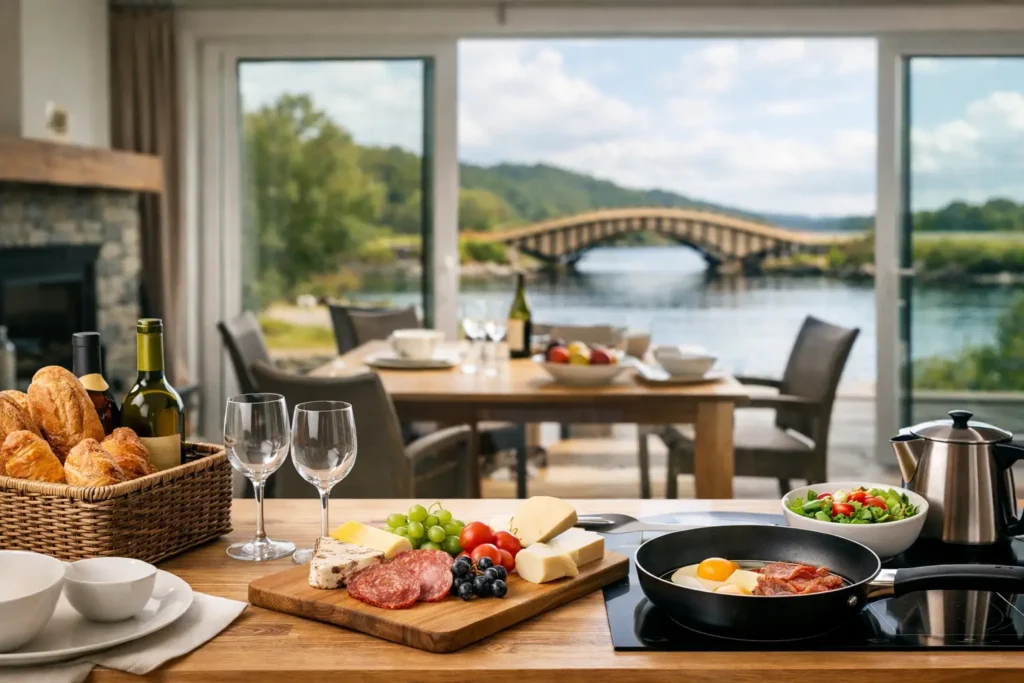
The word self-catering can make some organisers picture cooking for ten people and cleaning up all weekend. It does not have to work that way. You can keep it simple with a breakfast shop, coffee on hand and one easy meal at the property. The point is choice, not turning the organiser into a chef.
Choose accommodation with clear arrival information, adequate kitchen equipment and a straightforward check-out process. For a celebration trip, support with activities, dining ideas and local logistics can be just as useful as the accommodation itself. Carrick Self Catering helps groups put those pieces together, so there is less back-and-forth and more time to enjoy the break.
Questions to ask before you book
Rather than asking which option is universally better, start with the purpose of the trip. Are you planning to spend time together at the accommodation, or only sleep there? Is the group budget tight once meals and taxis are included? Will people value private rooms more than a shared living area? And does anyone need step-free access, a travel cot, parking or a particularly quiet bedroom?
It is also worth confirming the details that can cause disappointment later: the bed layout, bathroom numbers, security deposit, check-in arrangements and house rules. For hotels, check whether breakfast is included, if rooms are close together and whether the bar or restaurant needs advance booking. For self-catering, ask about the exact sleeping arrangements and whether the property is within easy reach of your plans.
The most successful group stays are rarely the ones with the longest itinerary. They are the ones where the accommodation supports the kind of time people actually want to have together. Choose the base that gives your group room to celebrate, rest and change plans without fuss.