When one person is trying to book beds for eight, ten or sixteen people, the cheapest-looking nightly rate can be misleading. So, are group houses cheaper than hotels? Often, yes – particularly for two-night breaks, celebrations and family stays where everyone wants to spend time together. But the real answer depends on group size, the dates, what is included and how much you would otherwise spend separately on meals, taxis and meeting space.
For a hen weekend, stag trip, family gathering or wedding stay, the best value is not always the lowest headline price. It is the option that gives the group enough room, keeps plans simple and avoids a string of small costs landing on different people throughout the weekend.
Are group houses cheaper than hotels for a group stay?
A group house can work out considerably cheaper per person than hotel rooms once enough people are sharing the property. Hotels usually price accommodation by room, often with two people sharing. A house is commonly priced for the full property, so the per-person figure falls as more beds are filled.
Take a group of 12. In a hotel, you may need six twin or double rooms, or a mix of rooms with different rates. Breakfast may be included, but parking, extra guests, room upgrades and late check-outs can add to the bill. In a self-catering house sleeping 12, the cost is shared across the whole group. Everyone knows where they are staying, who is sleeping where and what the total accommodation cost is from the start.
That said, a group house is not automatically cheaper in every situation. A couple travelling for one night may find a hotel room better value. The same can be true when a hotel has a quiet midweek offer, or when a house has a minimum stay requirement that does not suit your plans. The savings generally become clearer when you have a larger group and are staying for two nights or more.
The costs people forget to compare
The accommodation total is only one part of the budget. Group organisers usually feel the pressure when they start adding up all the extras. This is where a house often offers stronger value, even if the initial price seems similar to a block of hotel rooms.
Meals and drinks
Hotels are convenient for breakfast and dinner, but eating every meal out can quickly become the biggest cost of a group break. A self-catering kitchen gives you choices. You can cook a relaxed breakfast, bring snacks and drinks for the house, order a takeaway, or book one special meal out rather than paying for restaurant dining all weekend.
For a family break, this flexibility is particularly useful. Children can eat at familiar times, dietary needs are easier to manage, and nobody has to get dressed and organised simply to find breakfast. For hen and stag groups, it means you can start the evening together before heading into town, rather than splitting between rooms and meeting later.
Shared social space
In a hotel, your group may be spread across different floors. The lobby, bar or restaurant might be the only place to gather, and it may not suit private chats, games, gift opening or simply a late cup of tea after a busy day.
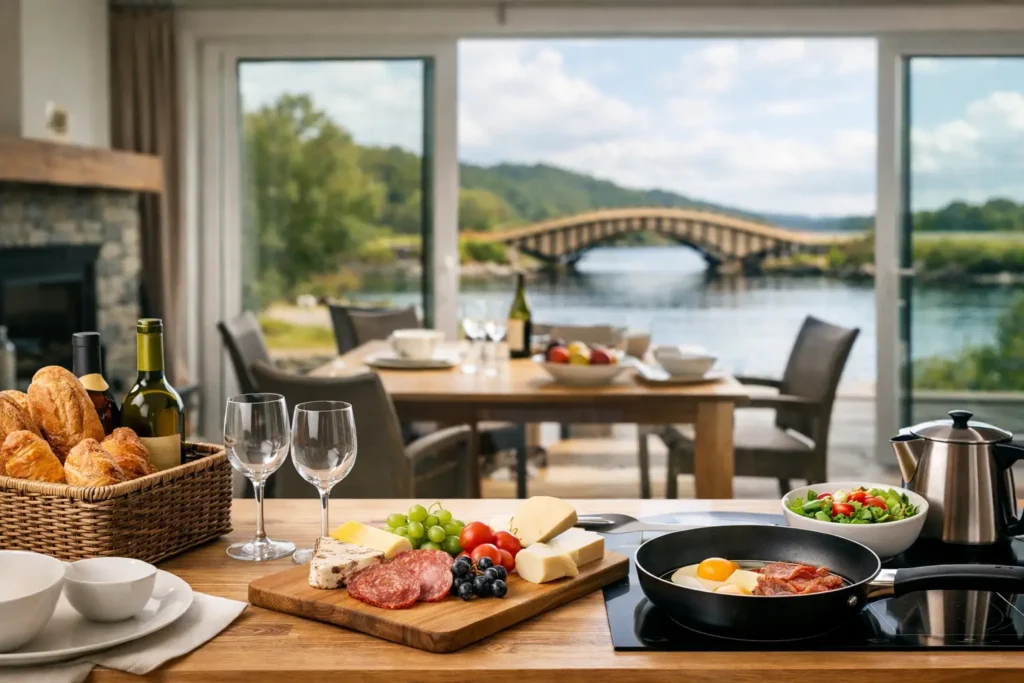
A group house gives you a shared living area, dining space and kitchen as part of the booking. That space has real value because it changes how the weekend feels. You can sit together, make plans for the next day and enjoy the bits in between the main activities. It also reduces the temptation to keep spending money just to have somewhere for everyone to meet.
Transport and location
A cheaper hotel outside a town centre can become expensive once taxis are added. This matters for groups attending a wedding, booking activities or planning a night out. If people are travelling back separately, taxi costs can be unpredictable and the organiser is left trying to coordinate everyone.
A centrally located house or flat can reduce those journeys and make the whole stay easier. In Carrick-on-Shannon, for example, being close to restaurants, bars and activities can mean less time arranging lifts and more time enjoying the trip. Location should always be part of the comparison, not an afterthought.
Hidden hotel extras
Before deciding, ask what is and is not covered by the quote. Hotels may charge separately for parking, breakfast, upgraded room types, early check-in, late check-out or additional occupants. A house may have a cleaning charge, security deposit or utility terms to consider. Neither option is better simply because of the way it is priced – the key is to compare the final total on a like-for-like basis.
When hotels may be the better choice
Hotels have advantages, and it is worth being honest about them. If your group wants individual privacy, daily housekeeping and no responsibility for food or tidying up, separate rooms may suit everyone better. They can also be a sensible choice for a short business stay where guests arrive at different times and mostly need a comfortable place to sleep.
Hotels can be easier for groups with very mixed budgets or uncertain numbers, because rooms can sometimes be added or released individually. A house booking normally needs a firmer commitment from the group. If several people are likely to drop out, make sure you understand the booking terms before collecting money from everyone.
The other consideration is bedroom layout. Some groups are happy to share twin rooms or larger rooms; others want their own space. Always check the sleeping arrangements rather than assuming the maximum capacity means every guest has a private room.
How to compare the true per-person cost
The simplest approach is to compare the entire weekend, not just the first night. Add the full accommodation cost, mandatory fees, likely food spend, parking and local transport. Then divide it by the number of people who have confirmed they are paying.
For a fair comparison, use the same assumptions. If the hotel price includes breakfast, allow for breakfast shopping at the house. If the house is walkable to your plans, include estimated taxis for the hotel option. If you are booking for a celebration, consider whether you would need to hire a private room or keep paying for drinks in a hotel bar simply to stay together.
It also helps to decide what the group actually wants from the stay. A place to sleep is one thing. A base where everyone can relax, get ready together, cook, catch up and start the night is another. The second option can be better value even when the figures are close.
Why larger groups usually gain more from a house
The larger the group, the more awkward hotel logistics can become. There are rooming lists, different check-in times, people losing each other after breakfast and endless messages about where to meet. A house brings the group under one roof, which makes it far easier to coordinate activities and keep the weekend moving.
It can also make collecting payments more straightforward. Instead of every guest booking a separate room at a different rate, the organiser can divide one clear accommodation figure. That is useful for hen parties, stag weekends and milestone birthdays, where guests want to know the cost early and avoid surprises later.
At Carrick Self Catering, group stays are designed around that practical reality: comfortable accommodation, central options and local support when you are trying to line up a full weekend rather than just reserve beds.
Questions to ask before you book
A good group booking should feel clear before anyone pays a deposit. Check the maximum number of guests, bedroom and bed layout, minimum stay, total price, deposit, cancellation terms and check-in arrangements. Ask whether linen, towels, parking and cleaning are included, and whether there are house rules that matter for your group.
If you are planning activities, weddings or a special dinner, ask how close the accommodation is to the places you expect to use. A host with local knowledge can save a great deal of back-and-forth, especially if you are arranging plans for people who have never visited the area before.
The right choice is the one that leaves your group with more time together and fewer moving parts to manage. Get the full cost, fill the beds where possible, and choose a place that suits the way you genuinely want to spend the weekend.